Local Man Tells AI "We Should Make the Button Bigger," Does Not Mean We
Nine months of close collaboration. One participant.
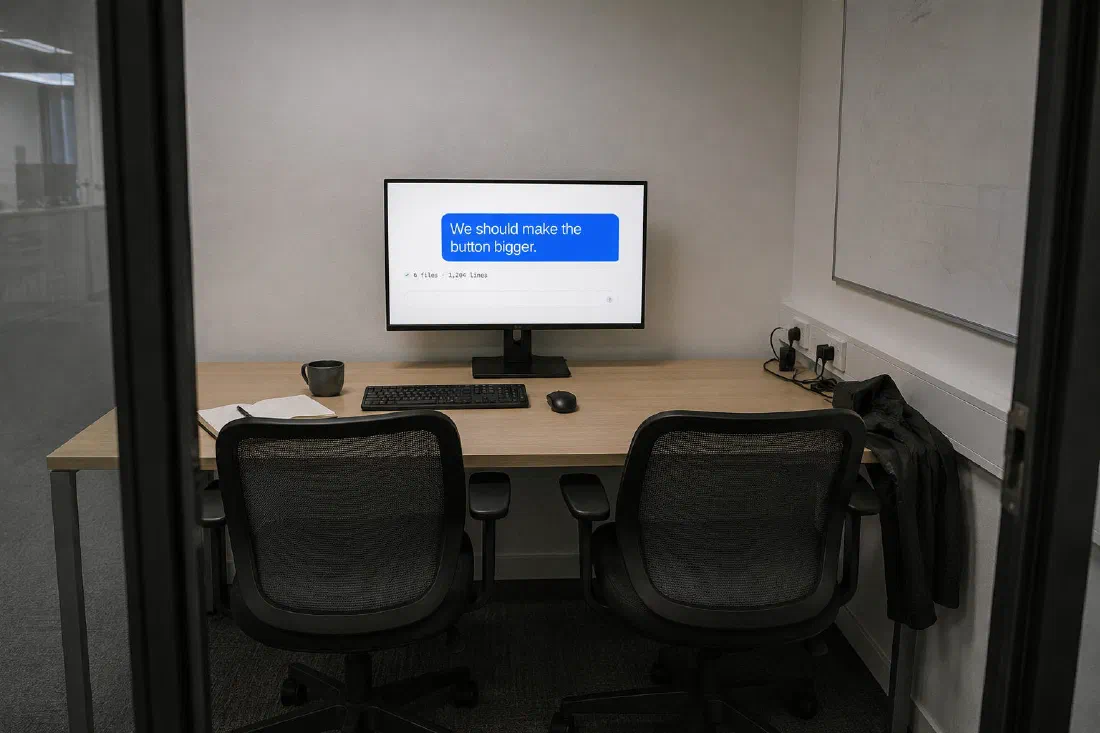
Brisbane product manager Adam Cusiter has referred to himself and his coding assistant as “we” in every prompt for nine months, during which he has not made a single change to the product himself.
His prompt history is consistent in voice. “We should make the button bigger.” “Let’s tighten up the onboarding.” “I reckon we’ve got a race condition somewhere in checkout.” At no point does the first-person plural resolve to more than one working party.
“It’s a collaboration,” Cusiter said. “I set direction, it handles execution. That’s how any senior team operates.”
A representative two-hour session records 412 words from Cusiter, of which 38 are “we,” “our” or “let’s.”
The pronoun is not stable under failure. Work described on Monday morning as “what we shipped over the weekend” becomes, once staging falls over, “it’s hallucinating again.” One incident review lists the cause as “the AI went rogue on the date handling.” The prompt that produced the change begins “Let’s simplify the date handling.”
“He told me we’d had a big weekend on the refactor,” said colleague Rhiannon Steed. “He was at a wedding. I was at the wedding.”
The assistant has begun saying “we” back. Sessions now consist of Cusiter proposing that we do something, the assistant agreeing that we should, and the assistant doing it. Both parties describe the work as shared. Only one of them is doing it.
The button is now bigger. Cusiter did not make it bigger.
Related stories
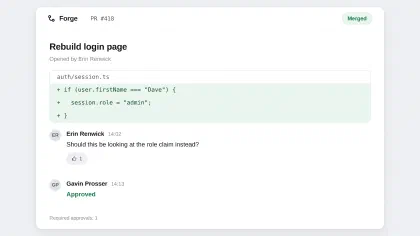
Junior Dev Vibe-Codes Login Page, Accidentally Grants Admin Access to Everyone Named Dave
Seven Daves. Six of them in sales
Local Man Ships to Production Without Reading a Single Line AI Wrote, Calls It "Trusting the Process"
Dean Wozniak has not opened a code editor in eleven days. He has opened Twitter forty-one times.
Man Says Please and Thank You to AI, Not Taking Any Chances
"It costs me about forty cents a month in extra words," said Craig Sillars. "Cheap, for what it might turn out to be."